How to Find a Top-Rated Residential Roofing Contractor
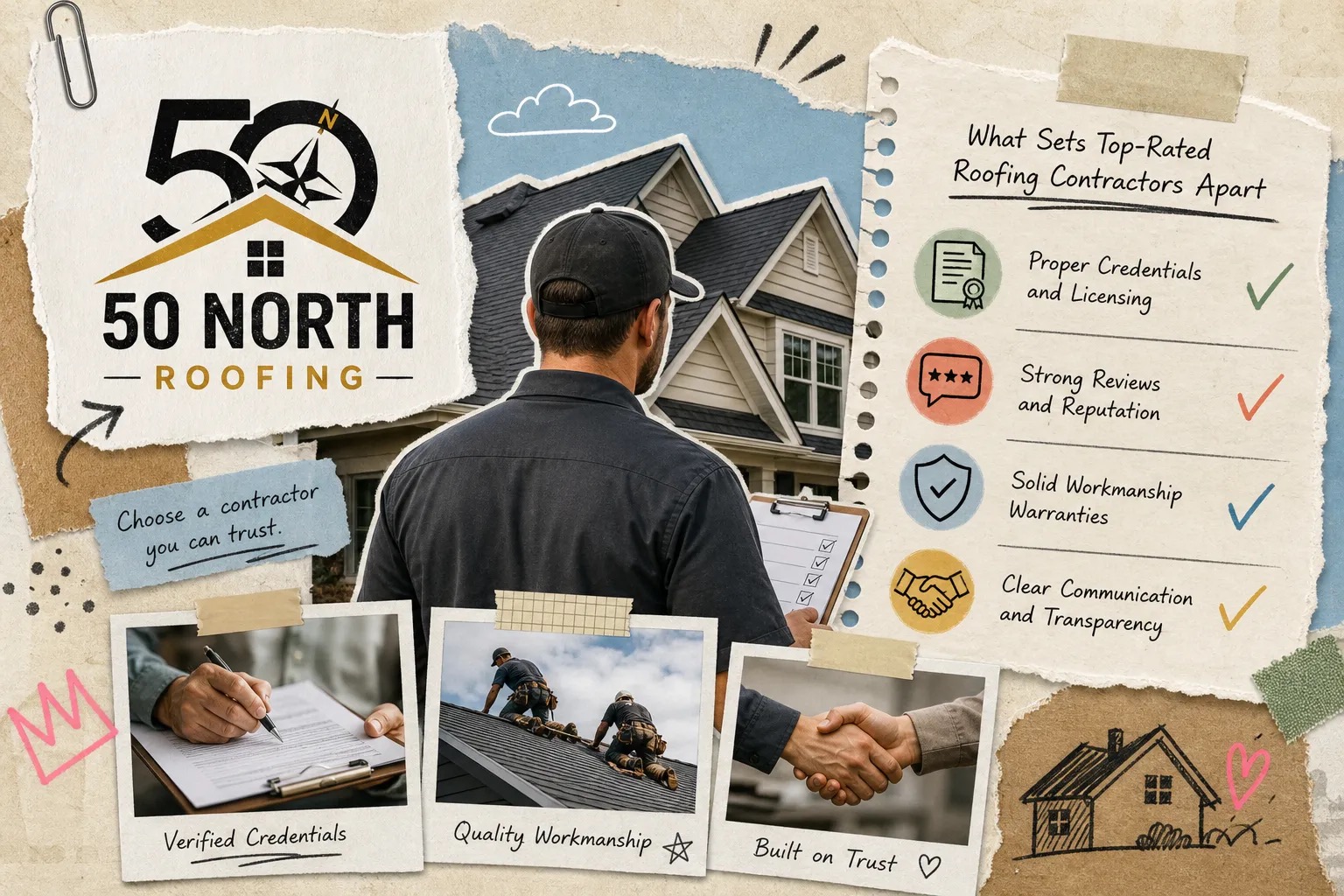
The best residential roofing contractors, wherever you’re searching, share the same short list of non-negotiable traits: an active state license, verifiable insurance, consistent high-volume reviews, and a workmanship warranty they’ll put in writing. If a contractor you’re evaluating can’t confirm all four, keep looking.
The difficulty isn’t finding local roofing companies. There are plenty. The real challenge is separating reliable contractors from ones that look impressive in a Google search but cut corners the moment your back is turned. This article gives you the specific credentials to verify, how to read reviews the right way, what a real warranty includes, and a pre-hire checklist to use before you sign anything.
Key takeaways
- License verification: Look up the contractor’s state license number directly through the licensing board; a website badge or verbal claim is not proof.
- Insurance documents: Request a certificate of insurance showing both general liability and workers’ compensation, sent directly by the insurer or agent.
- Review quality: Volume and detail matter as much as star rating; recent reviews that name crews, materials, and timelines are the most reliable.
- Warranty terms: Manufacturer warranties cover materials; workmanship warranties cover installation errors. You need both confirmed in writing before work begins.
- Written estimates: A proper estimate specifies materials by brand and grade, payment schedule, timeline, and permit responsibility, not just a bottom-line number.
- Checklist discipline: Verify every step before signing. Missing any item on the checklist, license, insurance, written warranty, or a detailed estimate, commonly leads to post-job disputes.
What actually separates a top-rated roofer from an average one?
Volume and consistency of verified reviews signal sustained performance
A contractor with 50 reviews and a 4.8-star rating tells a very different story than one with 265+ reviews at the same score. The first could reflect a strong quarter. The second reflects years of consistent work across hundreds of different projects and homeowners. Review count matters alongside star rating because volume is harder to fake and harder to maintain over time.
Detail-rich reviews are also more reliable than vague praise. A review that names the crew, specifies the materials installed, notes whether the timeline held, and explains how a minor hiccup was resolved tells you far more than “great job, highly recommend.” When shortlisting contractors for a full replacement, read for specifics, not sentiment.
Local climate expertise directly affects how long your roof lasts
Coastal and storm-prone markets like Eastern North Carolina present conditions that generic roofing experience doesn’t prepare a contractor for. Coastal environments accelerate corrosion on roofing fasteners and other metal components. Hurricanes stress wind uplift ratings to their limit. Year-round humidity cycles work against materials not selected for the environment. A contractor who works regularly in these conditions understands which materials hold up and which fail early, and they know why certifications like FORTIFIED™ matter for both structural protection and potential insurance savings.
Owner involvement and accountability go hand in hand
There’s a real difference between a high-volume operation cycling through subcontractor crews and one where the owner stays involved from the initial estimate through final inspection. Owner involvement is associated with better accountability and often fewer hand-off issues between crews or busy seasons, look for it in the reviews, not just in the sales pitch. Look for contractors where ownership is visible in reviewer comments, not hidden behind a rotating sales team.
Which credentials should you verify before you sign anything?
State licensing: look up the number, not just the claim
In North Carolina, a roofing contractor must hold an appropriate license through the North Carolina Licensing Board for General Contractors when the total project cost reaches $40,000 or more. The classification should cover roofing work. It typically falls under Residential, Building, or the specialty classification S(Roofing), check each option in the NCLBGC public database if you’re unsure which applies. Confirm the status is active and match the legal business name on the license to the entity signing your contract.
A “licensed and insured” badge on a website is a marketing claim. The two minutes it takes to verify the license number in a public database is worth more than any badge or tagline.
Insurance certificates protect you, not just the contractor
Request a current certificate of insurance sent directly by the contractor’s insurance agent or carrier, not a photocopy or screenshot. It should show two separate coverage lines: commercial general liability and workers’ compensation. If a crew member is injured on your property and the contractor carries no active workers’ comp, you can be held liable. Call the number printed on the certificate to confirm both policies are active before work begins, and reverify if the project extends past a policy expiration date.
Industry certifications that mean something
Manufacturer certifications such as GAF Master Elite or Owens Corning Preferred indicate that a contractor has met installation training standards set by the manufacturer, and they typically unlock stronger material warranty options. FORTIFIED™ certification from the Insurance Institute for Business and Home Safety signals that the contractor is trained to build roofs meeting enhanced storm-resistance standards, which can also qualify North Carolina homeowners for insurance discounts. These credentials aren’t universal among regional contractors, and their presence or absence tells you something meaningful about a company’s investment in its own craft.
How to read roofing reviews the right way
Red flags hide inside five-star ratings
Even highly rated contractors carry complaint patterns worth identifying. BBB complaint data consistently shows recurring themes across the industry: leaks that persist after a repair, workmanship defects like uneven installations or missing flashing, poor communication after the job ends, billing disputes, and collateral property damage during installation. The most telling pattern isn’t the initial complaint; it’s whether the resolution addressed the root cause or just the symptom. Disputes over whether a repair was actually adequate, followed by inconsistent warranty follow-through, appear across BBB records even for contractors with strong overall ratings.
What a genuinely trustworthy review looks like
Reliable reviews mention whether the timeline held, crew behavior on site, cleanup, the materials used, and how any issue was handled after the job. Recent reviews within the past 12 months carry more weight than older ones. A pattern of templated praise is easier to discount than a pattern of project-specific detail. If 10 reviews in a row read like they were written from the same template, that’s worth noting.
Negative reviews are a screening tool, not a dealbreaker
A contractor with hundreds of completed jobs and zero complaints is rare. What matters is how they respond. A strong response acknowledges the specific issue, assigns a named accountable contact, commits to a concrete inspection timeline, and addresses the underlying problem rather than applying another temporary fix. Responses that simply say “the work was completed” or “this complaint is false” without offering a path to resolution reveal more about a contractor than the complaint itself does.
What warranty coverage tells you about a contractor’s confidence
Manufacturer and workmanship warranties cover different risks
A manufacturer warranty covers defects in the roofing materials themselves: shingles that crack, curl, or fail because of a production problem. A workmanship warranty covers installation errors, improper flashing, inadequate sealing, incorrect nailing, and ventilation mistakes. Most early roof failures trace back to installation, not materials. That makes the workmanship warranty the more practically important document in the first several years after a replacement, even when a manufacturer offers a long material warranty.
| Warranty type | Covers | Generally excludes |
|---|---|---|
| Manufacturer | Defective shingles, tiles, underlayment, and covered products | Poor installation, storm damage, maintenance failures, often removal and replacement labor |
| Contractor workmanship | Leaks and damage caused by installation errors; repair labor and materials | Storm damage, hail, later modifications, normal wear |
What to require before you sign
The National Roofing Contractors Association reports that many contractors offer one or two years on workmanship, with stronger and more competitive coverage for a full replacement running five years or more. A solid workmanship warranty covers leak-related failures, flashing, ventilation, and all associated repair labor. Ask directly whether the warranty is transferable if you sell the home, and ask who backs it: the contractor or a third party. Get the terms in writing before work starts. Verbal assurances don’t hold up when you need them to. Roofers with warranty terms documented in the contract are worth the extra scrutiny up front, it’s the clearest sign they stand behind their work.
How to compare estimates without leaving money on the table
A proper estimate is a document, not a conversation
A written estimate should specify the full scope of work, materials by brand and grade, timeline, payment schedule, and who pulls the permits. Single-page proposals with no line items don’t give you enough to compare contractors fairly or to hold anyone accountable after the fact. Get at least three written estimates from licensed contractors and confirm that each one covers the same scope before you compare prices.
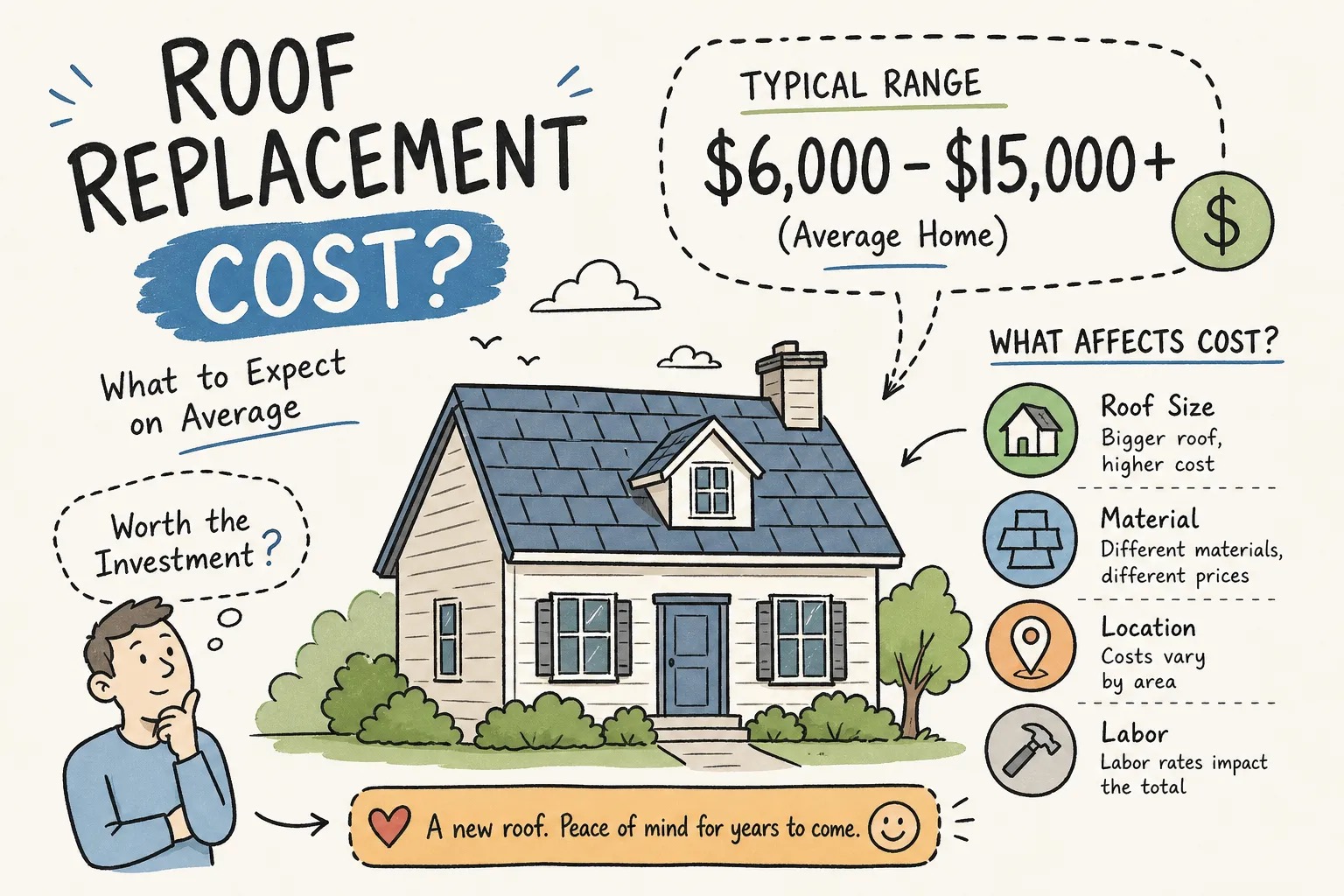
As a national planning reference, minor roof repairs run $150 to $1,000 and moderate repairs $1,000 to $3,000, according to allroofingcalculators.com. Metal roofing, steep pitches, multiple layers, and coastal-grade materials push costs toward the higher end, often for good reason.
A simple pre-hire checklist before you sign
- Confirm the active state license number in the NCLBGC public database
- Request and review the certificate of insurance showing general liability and workers’ compensation
- Verify review volume and recency on Google and BBB
- Get workmanship warranty terms in writing before work begins
- Confirm in writing that the contractor, not you, is responsible for pulling permits
- Check that the signed contract matches the written estimate exactly, line by line
What a top-rated local roofing contractor looks like in practice
About 50 North Roofing Company
We specialize in metal roofing systems including aluminum, Galvalume, and copper, and we’re FORTIFIED™ certified to install roofs built to meet coastal storm conditions in Wilmington, NC and the surrounding region.
Why owner involvement matters for your project
Our owner-involved model means accountability doesn’t disappear after the contract is signed. The same team that walks your property during the initial estimate stays responsible for the finished product. That continuity produces more consistent workmanship and faster resolution if any issue surfaces after installation. It also means you have a direct line of accountability, not a call center or a subcontractor you’ve never met.
Your next step
Apply this checklist to every contractor you evaluate, wherever you’re located. Verify the license, request the insurance certificate, read the reviews critically, and get the warranty in writing. Those four steps eliminate most of the risk in a roofing hire before a single nail goes into your deck.
For homeowners in Eastern North Carolina, reach out to our team at 50 North Roofing Company to schedule a roof inspection. We’ll walk your property, document what we find, and provide a detailed written estimate. Run every item on the checklist against us, that’s exactly the process we’d encourage you to use on any residential roof repair service or replacement contractor in your area, and we’re confident in what you’ll find. Finding top-rated residential roofing contractors nearby comes down to verifying the license, confirming insurance, reading the reviews carefully, and getting a written warranty before work begins.
Frequently Asked Questions
Are workmanship warranties typically transferable if I sell my home?
Workmanship warranties may or may not be transferable, so you must ask and get the terms in writing. We advise confirming whether the warranty transfers and who backs it, the contractor or a third party, before work begins.
Which roofing materials are appropriate for coastal storm conditions?
Metal roofing options like aluminum, Galvalume, and copper are among the materials we specialize in for coastal conditions, and FORTIFIED™ certification signals training to build roofs for enhanced storm resistance. We note that coastal environments accelerate corrosion and stress wind uplift ratings, so selecting materials and certifications suited to those conditions matters for longevity and potential insurance benefits.


 Hi! I'm your virtual assistant, here to help assist you navigate www.50northroofing.com!