How Much Does Roof Replacement Cost on Average?
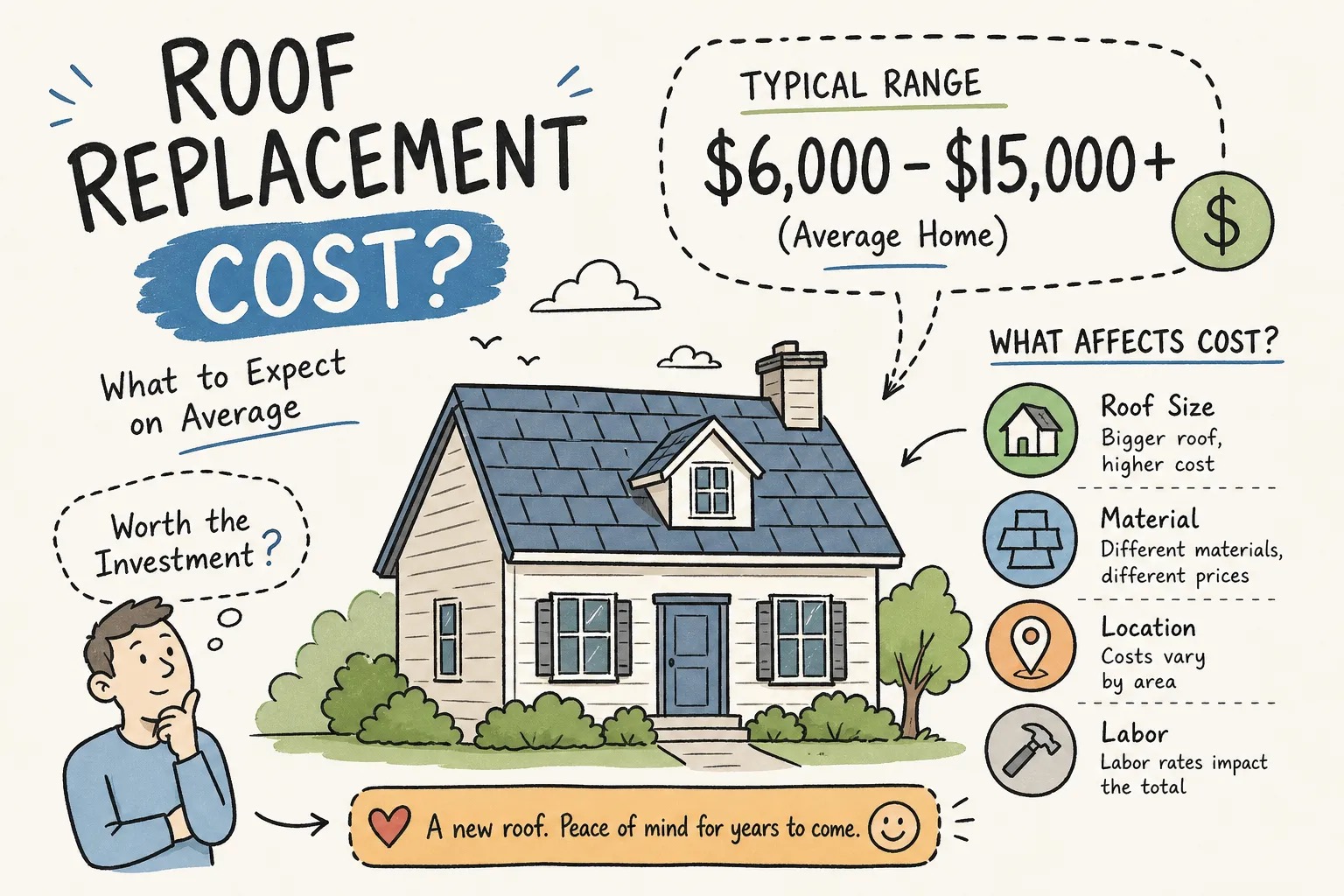
The roof replacement average cost for a standard asphalt-shingle job in 2026 runs between $9,600 and $12,000 nationally, with a broader typical range of $5,900 to $13,400, according to BetterHouse and The Roofing Brief’s 2026 roofing cost data. That range can climb to $30,000 or more once material upgrades, roof geometry, and regional labor rates enter the picture, as reported by BetterHouse, The Roofing Brief, and RoofVista. Before you call a single contractor, knowing where your project falls helps you compare bids with confidence and avoid surprises at contract signing.
For a 2,000-square-foot home with architectural asphalt shingles, budget roughly $10,000 to $16,000 all-in, according to RoofVista’s 2026 state pricing data. That figure covers tear-off, labor, materials, and disposal, not just the shingles themselves. The closer you get to understanding what drives each of those costs, the better equipped you are to compare bids and catch the ones that cut corners.
Key takeaways
- Material is the biggest lever: Upgrading from asphalt to metal or slate can double or triple your project cost, but lifespan math often justifies the premium.
- Region shifts the price significantly: A Northeast replacement can run roughly 45% more than a comparable Texas job for the same asphalt-shingle scope.
- Hidden line items add up: Tear-off, decking repair, permits, and disposal are often bundled loosely or omitted entirely from initial quotes.
- Pitch and complexity multiply labor: A steep, cut-up roof can add 20% to 40% more in labor costs on top of the larger surface area it creates.
- Itemized bids are essential: Every quote should specify roof area, shingle grade, tear-off layers, underlayment, flashing, decking allowance, permits, and disposal before you compare totals.
What the roof replacement average cost actually looks like in 2026
The national average gives you a starting point for planning, but the specifics of your home shape where your project actually lands.
The number moves fast once you upgrade materials. When you spread that cost over the roof’s lifespan and compare it to two or three asphalt replacements over the same period, the premium starts to make a lot more financial sense.
How your material choice changes the roof replacement average cost
After learning the average, most homeowners ask the same follow-up question: what if I don’t want asphalt? Material choice is the single biggest variable in a roofing budget, and the spread between the cheapest and most expensive options is substantial.
One note on how contractors talk about roof area: a “roofing square” equals 100 square feet, so a 2,000-square-foot roof is 20 squares. Bids are often priced per square, and knowing this ratio helps you evaluate quotes without needing a calculator.
Asphalt shingles
Asphalt shingles remain the most affordable and widely available option. Architectural shingles cost more than basic 3-tab but perform significantly better in coastal conditions. Many manufacturers and industry guides report a lifespan of 20 to 30 years for architectural shingles, depending on grade and exposure. For most budget-driven decisions, they’re the right starting point for a comparison.
Metal roofing
Metal roofing carries a higher installed cost but delivers a lifespan of 40 to 70 years with minimal maintenance. Standing-seam systems are pricier than exposed-fastener panels, but they’re the right call for coastal and storm-prone markets where long-term durability matters most. 50 North Roofing Company has installed over 2,500 metal roofs across Eastern North Carolina.
Tile and slate
Tile and slate sit at the premium end of the spectrum. Concrete tile is more affordable than clay, and natural slate is the most expensive option on the market. Both require structural consideration for added weight and specialized installation, which is why the per-square-foot range runs so wide: scope and site conditions matter as much as material price.
Does where you live change what you’ll pay?
Yes, and by more than most homeowners expect. Regional pricing is one of the most underestimated factors in a roofing budget. A Northeast replacement can cost roughly 45% more than a comparable Texas job for the same asphalt-shingle scope, according to Roofing Calculator HQ’s 2026 regional pricing data.
Labor is the largest regional driver. Coastal metros and Northeast markets generally run 10% to 20% above rural quotes in the same state. Building codes in hurricane zones require stronger fastening, enhanced underlayment, and code-compliant materials that add thousands to the base cost before a single shingle goes on.
Timing also matters in storm-prone markets. In Florida, Q3 quotes can run about 20% above Q1 due to demand spikes following hurricane activity, according to Roofing Calculator HQ. In Eastern NC, FORTIFIED™ Roof standards and coastal-grade materials represent the same kind of code-driven cost driver, but they can also unlock insurance discounts that offset the premium over the life of the roof.
What’s actually hiding inside your roofing quote
Most homeowners look at a quote total without understanding what’s bundled in and what’s been quietly left out. For a standard asphalt roof, roughly 60% of the total goes to labor and 40% to materials, based on 2026 industry cost breakdowns from HomeBuddy. Premium materials like metal, tile, or slate push the materials share higher. Understanding this split helps you evaluate suspiciously low bids, which typically cut labor corners rather than material costs.
The line items that most lump-sum quotes bury or omit entirely are where the real surprises live, according to HomeBuddy and BuildNavigate’s 2026 roofing cost data:
- Deck condition can’t be confirmed until tear-off is complete.
Ask every contractor whether the quote specifically covers all existing layers, dumpster fees, magnetic nail cleanup, permits, and a decking-repair allowance before you compare totals. A quote that doesn’t address these as separate line items is rolling them into a lump sum where you have no way to verify what you’re actually paying for.
How roof size, pitch, and complexity change the final number
Your home’s floor plan is not your roof area. A 2,000-square-foot floor plan at an 8/12 pitch produces 2,404 square feet of actual roof surface before any waste factor is applied. At 15% waste for a moderately complex roof, that’s roughly 2,765 square feet of material to order, about 27.7 roofing squares. The gap between floor area and ordered material is one of the most common sources of budget confusion when homeowners compare bids that use different area assumptions.
Pitch multipliers convert plan area into actual sloped surface, according to contractor estimating guides from gaugeyard.com and Calcady. A 6/12 pitch multiplies plan area by 1.118; an 8/12 pitch multiplies by 1.202; a 12/12 pitch multiplies by 1.414. Waste percentage ranges from 10% on a simple gable to 15% to 20% or more on a complex cut-up roof with dormers and valleys. These aren’t rounding errors: they represent real material quantities and real dollars.
Steep pitches add a labor factor on top of that larger surface area. Roofs steeper than roughly 7/12 require harnesses, roof jacks, slower production, and fall-protection equipment, pushing the labor-only factor to 1.10x to 1.75x depending on severity. Roof shape complexity carries its own multiplier: a simple gable is the baseline, while a highly cut-up roof with multiple dormers and valleys can reach 1.30x to 1.50x on labor. These two factors compound each other. That’s why a steep, complex roof can run 20% to 40% more per square than a comparable gable at a moderate pitch.
Special features are discrete line items, not included in the per-square material price. A quote that doesn’t address these separately is hiding them inside a number you can’t verify.
Getting from the national average to your actual roof replacement estimate
That national average is a useful planning anchor, but it’s not a final answer. Your actual number is shaped by material, region, roof geometry, hidden line items, and the quality of whoever builds your estimate. Homeowners who finish a re-roofing project with the fewest surprises are the ones who go into contractor conversations knowing exactly what questions to ask and what a complete itemized quote looks like.
Before signing anything, confirm that every bid specifies roof area, shingle grade, tear-off layers, underlayment type, flashing scope, decking allowance, ventilation, permits, and disposal. Build in a 10% to 20% contingency for decking damage that won’t surface until tear-off begins.
Our team at 50 North Roofing has installed over 2,500 metal roofs across the region and carries more than 265 five-star reviews, context that matters when you’re trusting someone with a significant investment on a coastal property.
Frequently Asked Questions
How should we budget for unexpected decking repairs during a roof replacement?
Budget for unexpected decking repairs by adding a 10% to 20% contingency to your estimate. Deck condition often can’t be confirmed until tear-off is complete, so that contingency covers repair work that shows up after removal and helps avoid surprises at signing.
How do pitch and waste affect how much roofing material we need to order?
Pitch and waste significantly increase the material you must order compared with your home’s floor plan. Pitch multipliers convert plan area to sloped surface (for example, 6/12 = 1.118, 8/12 = 1.202, 12/12 = 1.414) and waste ranges from about 10% on a simple gable to 15–20% or more on complex roofs, so a 2,000-square-foot plan at 8/12 pitch with 15% waste requires roughly 2,765 square feet of material (about 27.7 roofing squares).
Are itemized bids really necessary, or can we compare lump-sum quotes?
Itemized bids are essential for fair comparison and to spot hidden costs. Every bid should specify roof area, shingle grade, tear-off layers, underlayment, flashing, decking allowance, permits, and disposal, because lump-sum quotes often bury or omit line items like dumpster fees, magnetic nail cleanup, permits, and decking repair allowances.
When does choosing metal roofing make financial sense for our home?
Metal roofing makes financial sense when you value long lifespan and durability over lower upfront cost. Metal carries a higher installed cost but lasts 40 to 70 years with minimal maintenance, and it is especially appropriate in coastal and storm-prone markets where long-term durability matters; our team has also installed over 2,500 metal roofs across Eastern North Carolina, demonstrating that durability choice is often market- and site-driven.


 Hi! I'm your virtual assistant, here to help assist you navigate www.50northroofing.com!